Knowledge Hub
The Essential Guide Incoterms 2022:
Incoterms (International Commercial Terms) are globally recognized rules that define the responsibilities of buyers and sellers in international trade. Understanding these terms is crucial for smooth shipping operations.
Incoterms define the shipping obligations between buyers and sellers, including who pays for transportation, insurance, and customs duties.
Explore the latest updates to Incoterms, with simplified definitions and explanations of commonly used terms like:
- EXW (Ex Works)
- FOB (Free on Board)
- CIF (Cost, Insurance, and Freight)
- DAP (Delivered at Place)
Learn how to select the appropriate Incoterm for your shipment, considering factors such as:
- Mode of transport
- Cost implications
- Risk distribution between buyer and seller
Still Have A Questions?
Write to us below.
Incoterms are updated regularly to reflect changes in international trade practices. Incoterms 2020 introduced significant changes, particularly with the Free Carrier (FCA) term, allowing the buyer and seller to agree that the buyer instructs the carrier to issue an onboard bill of lading to the seller. While the exact updates for Incoterms 2022 are yet to be announced, they are expected to incorporate evolving technologies, regulatory updates, and new trade practices. Staying updated on these changes will help businesses adapt their shipping processes and ensure compliance with the latest standards.
Your Guide to Efficient Shipping Understanding Incoterms
Incoterms (International Commercial Terms) are vital for ensuring effective and efficient shipping processes. They provide clear guidelines on the obligations, risks, and costs for both the buyer and seller, helping to prevent disputes and misunderstandings. This clarity fosters smooth transactions and stronger business relationships.
By mastering Incoterms, businesses can make informed decisions about shipping processes and costs. Understanding who bears the risk and responsibility at each stage enables businesses to optimize their logistics operations strategically.
Moreover, companies well-versed in Incoterms gain a competitive edge. Leveraging this knowledge during negotiations with trading partners can reduce costs and mitigate risks.
Understanding the Incoterms Chart and Types of Incoterms
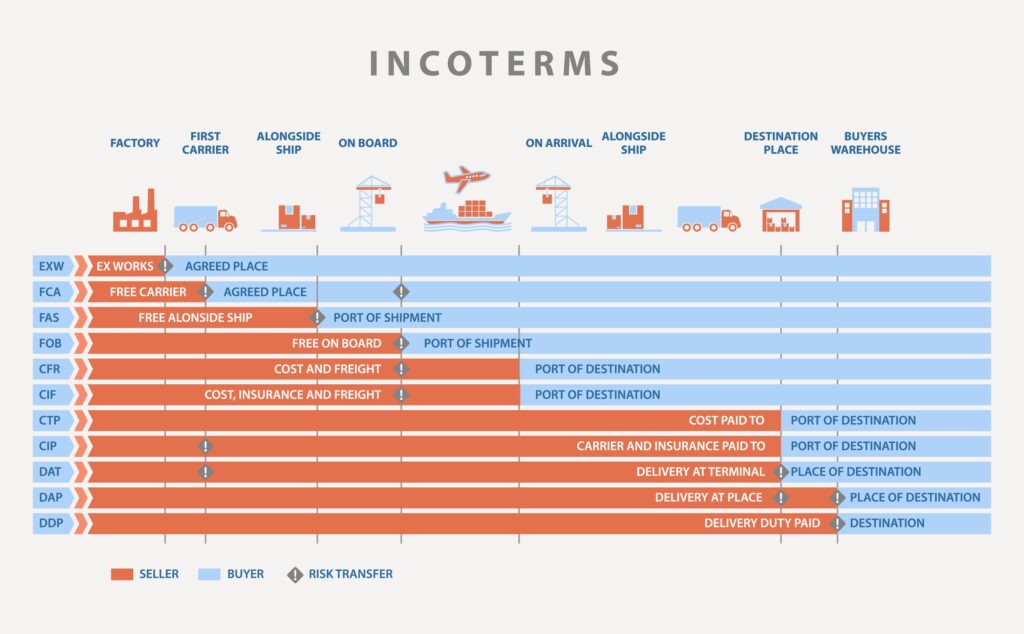
The Incoterms chart is an easy-to-use visual representation that outlines the responsibilities of both the buyer and seller. It details costs, obligations, and risks associated with each Incoterm.
There are 11 types of Incoterms, split into two groups:
- Terms applicable to any mode of transport: EXW, FCA, CPT, CIP, DAP, DPU, DDP.
- Terms applicable to sea and inland waterway transport: FAS, FOB, CFR, CIF.
Understanding this chart helps businesses select the most appropriate Incoterm for their shipping needs based on cost, risk, and transport mode.
Simplifying Shipping Processes with Incoterms
By providing a globally recognized framework, Incoterms simplify shipping processes and clearly define buyer and seller responsibilities. This reduces ambiguities and helps avoid potential disputes.
Businesses that effectively implement Incoterms can streamline their operations, making shipping more cost-effective and efficient. With clear identification of risks and costs at each shipping stage, businesses can plan and strategize accordingly.
Detailed Breakdown of Common Incoterms
EXW (Ex Works): The seller’s responsibility ends when the goods are made available for pickup at the warehouse or factory. From this point, the buyer assumes all costs and risks, often working with a freight forwarder to arrange the shipment from pickup.
FCA (Free Carrier): The seller delivers the goods to a specified carrier at a named location (terminal or warehouse), after which the risk transfers to the buyer.
CPT (Carriage Paid To): The seller covers transportation costs to a named destination, but the risk transfers to the buyer once the goods are delivered to that destination.
CIP (Carriage and Insurance Paid To): Similar to CPT, but the seller also arranges and pays for insurance coverage during transit.
DAP (Delivered at Place): The seller arranges the shipment and delivers the goods to a named place. The risk transfers upon delivery, but the buyer is responsible for import duties and taxes.
DPU (Delivered at Place Unloaded): The seller handles shipment and unloading at the named destination. Risk transfers to the buyer after unloading.
DDP (Delivered Duty Paid): The seller is responsible for the entire shipment, including customs clearance and delivery to the buyer’s premises, placing maximum responsibility on the seller.
FAS (Free Alongside Ship): The seller delivers the goods alongside the ship, at which point the buyer assumes responsibility for the main transit and remaining steps in delivery.
FOB (Free On Board): The seller is responsible for delivering goods onto a vessel. The buyer assumes risk and responsibility once the goods are on board.
CFR (Cost and Freight): The seller covers transportation to the destination port, but the risk transfers to the buyer once the goods are loaded onto the vessel at the port of origin.
CIF (Cost, Insurance, and Freight): Similar to CFR, but the seller also covers insurance for the goods during transit to the destination port.
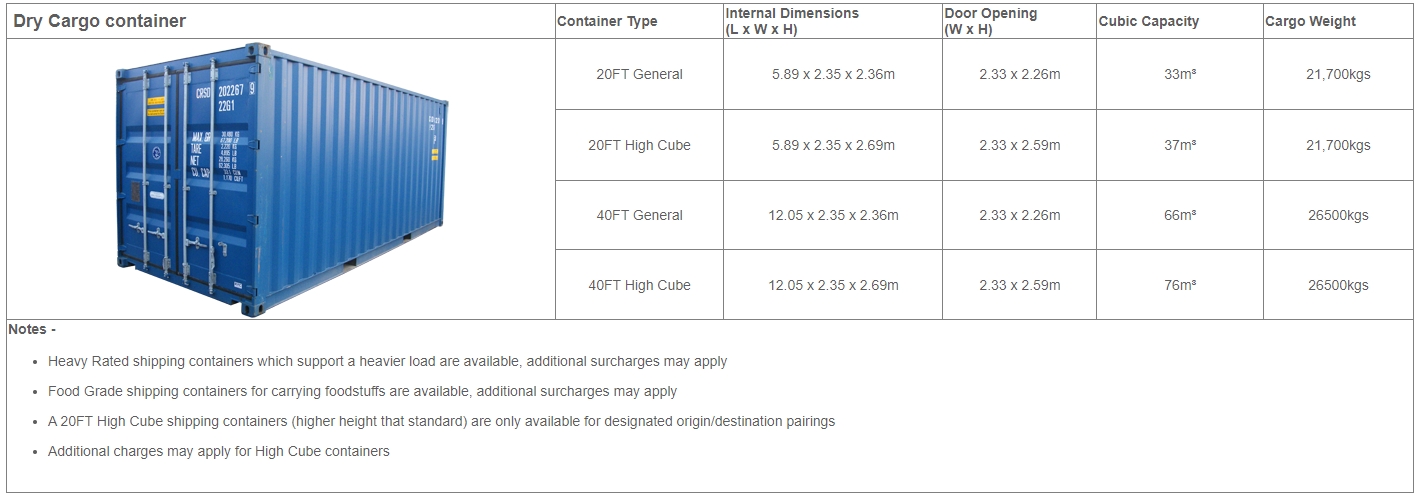
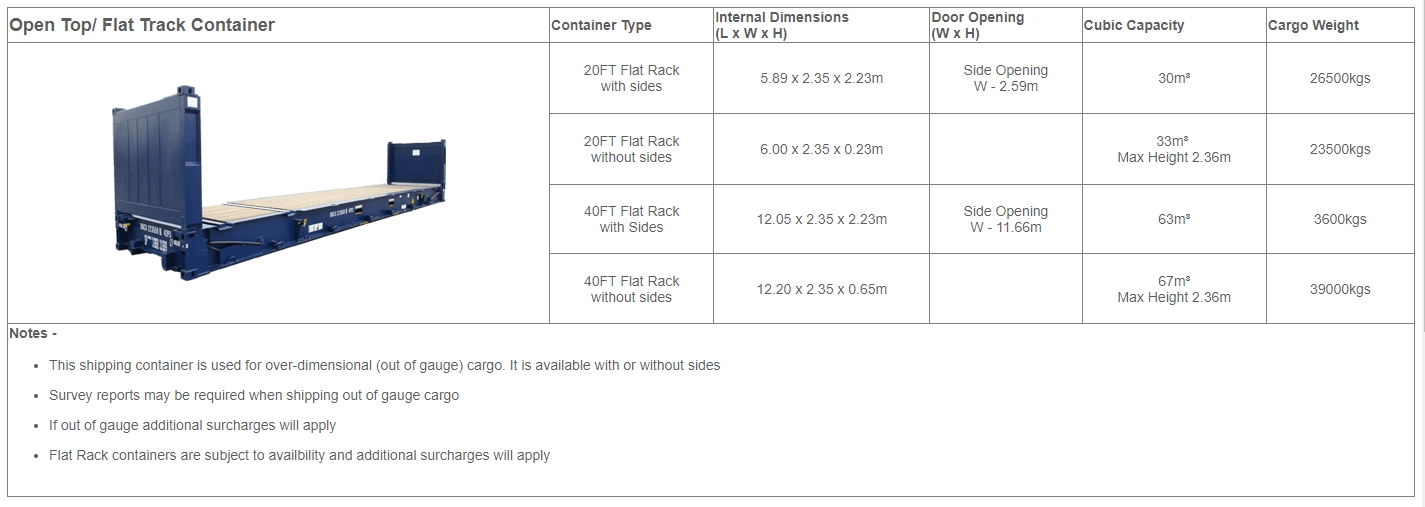
Container type
20" General Purpose
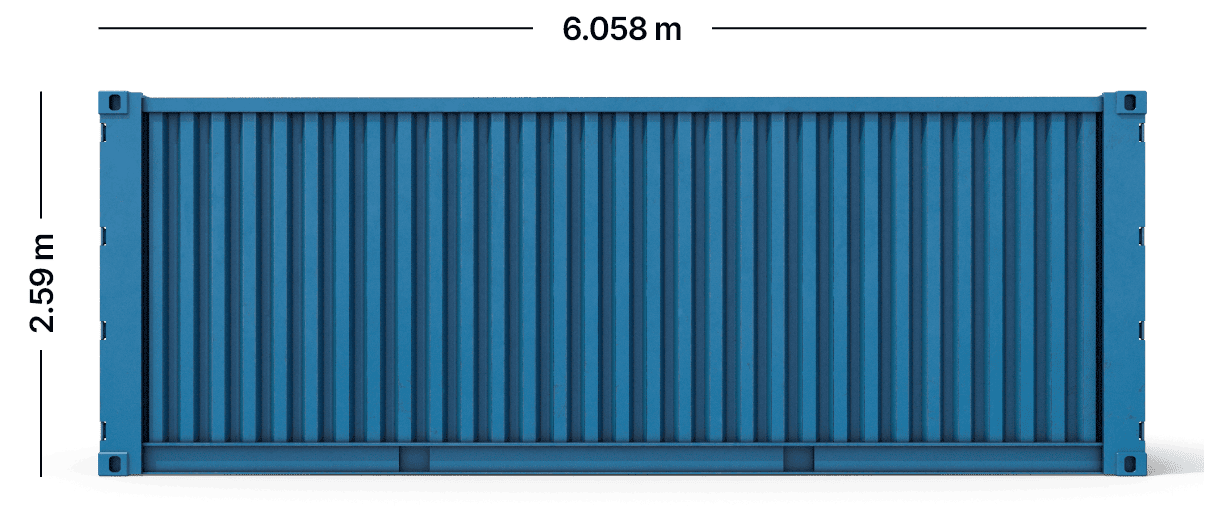
Specification Description
Cubic Capacity
33.2 m3
Max Payload
28,300 Kgs
Tare Weight
2,180 Kgs
Max Gross
30,480 Kgs
40" General Purpose
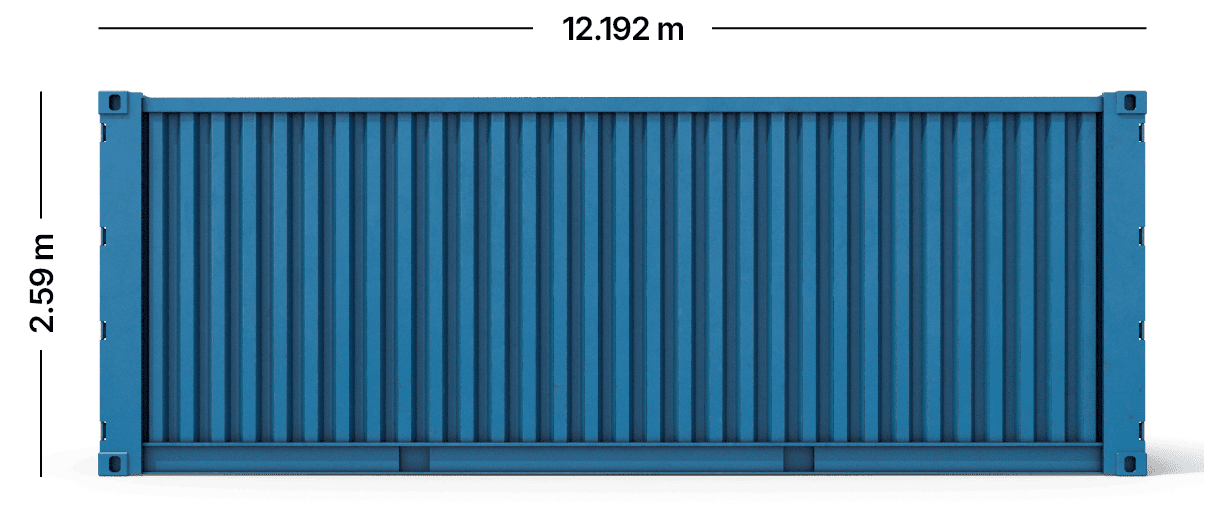
Specification Description
Cubic Capacity
67.7 m3
Max Payload
26,690 Kgs
Tare Weight
3,790 Kgs
Max Gross
30,480 Kgs